A tooth flies out of your mouth in an instant, and suddenly you’re left holding it in your hand, heart racing, wondering what to do next. When a tooth gets knocked out, the decision of where to go for care can feel overwhelming, but it is one of the most time-sensitive choices you will ever face in your oral health journey.
At Heart of Hingham Dental Aesthetics, we understand that dental emergencies don’t follow a schedule, and we are here to help our patients navigate exactly these moments. Dr. Sandhu and our team offer general dentistry care as a dependable resource for the Hingham community, including urgent situations where knowing where to turn makes all the difference.
Why the First 30 Minutes Matter Most
Time is the single most critical factor when a tooth is knocked out. According to the National Institutes of Health, most teeth can be successfully replanted if the extraoral dry time is kept under 30 minutes, after which the periodontal ligament cells that allow the tooth to reattach begin to suffer irreversible damage. This narrow window is what makes your first move so important.
The short answer to whether you should go to the ER or the dentist is this: go to your dentist first. Emergency rooms are equipped to treat bleeding, trauma, and life-threatening situations, but they are generally not prepared to replant a tooth. Most ER physicians lack the tools, training, or materials needed to properly reinsert and splint an avulsed tooth. A dentist, on the other hand, can manage the full scope of treatment, from reimplantation and flexible splinting to follow-up imaging and monitoring.
That said, if you cannot reach a dentist within that 30-minute window and bleeding or other trauma is severe, an emergency room visit is appropriate to stabilize the situation while you arrange dental care.
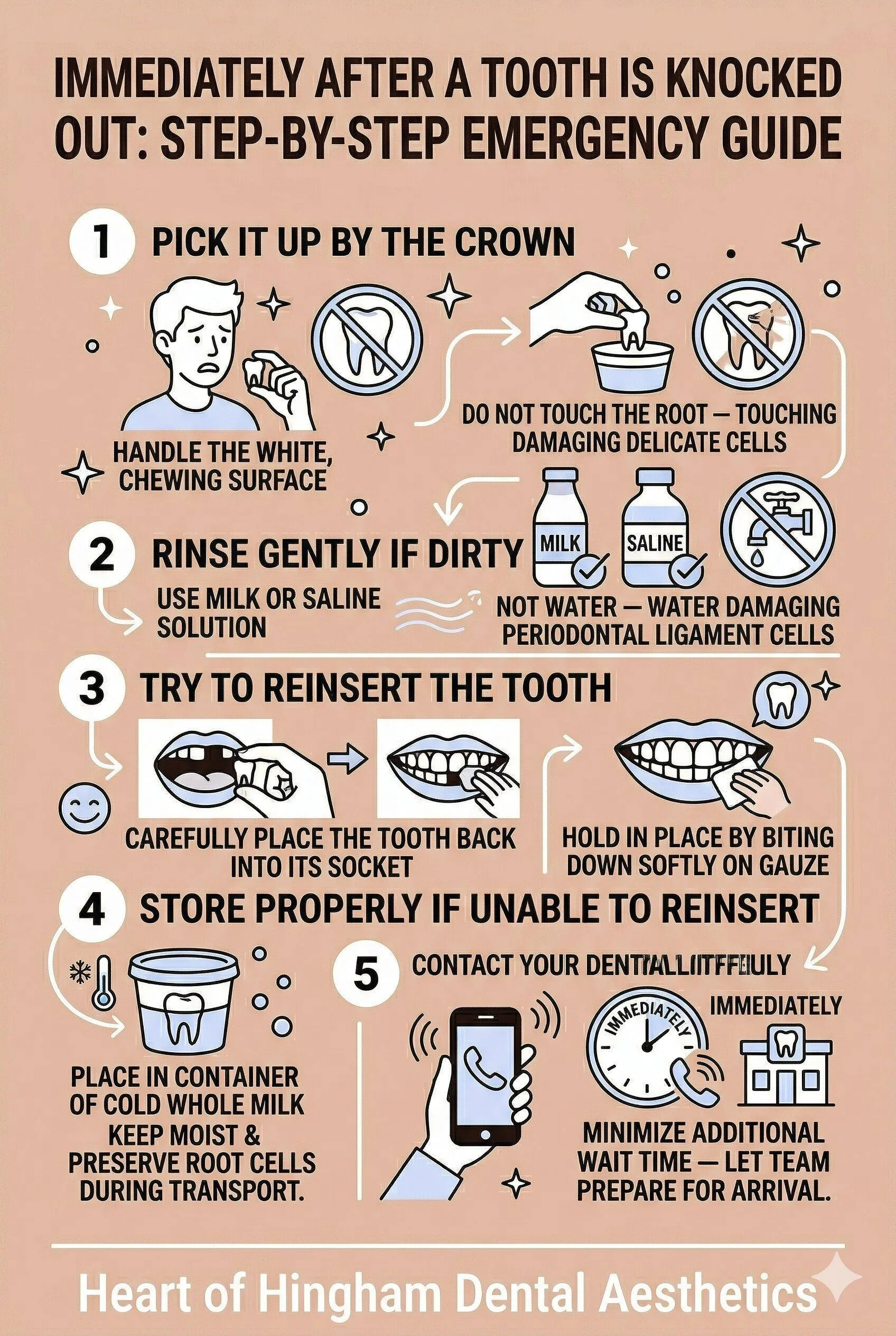
What to Do While You’re on the Way
How you handle the tooth from the moment it leaves your mouth until you sit in the dental chair matters enormously. Taking a few quick steps can make the difference between saving the tooth and losing it permanently.
What Happens at the Dental Office
Once you are in the chair, your dentist will evaluate the tooth, clean the socket, and carefully reposition the tooth back into place. From there, a flexible splint is placed to stabilize the tooth while the surrounding tissues begin to heal. This type of splinting allows for slight natural movement, which actually supports better reattachment than a rigid approach.
Follow-up appointments are a critical part of the process. During those visits, the tooth is assessed both clinically and with imaging to monitor for signs of root resorption, pulp health, or other complications. If a comprehensive exam reveals that the tooth cannot be saved, there are reliable restorative options, including implant crowns and dental bridges, both of which can restore full function and a natural appearance to your smile.
Heart of Hingham Dental Aesthetics Is Here When It Counts
When the unexpected happens, you deserve a dental team that meets you with calm expertise and genuine care. Dr. Sandhu was trained at Boston University and brings a thoughtful, modern approach to every patient she treats, including those who walk through the door in the middle of a dental emergency. Patients in Hingham and across the South Shore trust Heart of Hingham Dental Aesthetics for exactly this kind of attentive, responsive care.
Do not wait if a tooth has been knocked out. Every minute is critical. Reach out to our office right away so we can help you protect your smile before time runs out.