
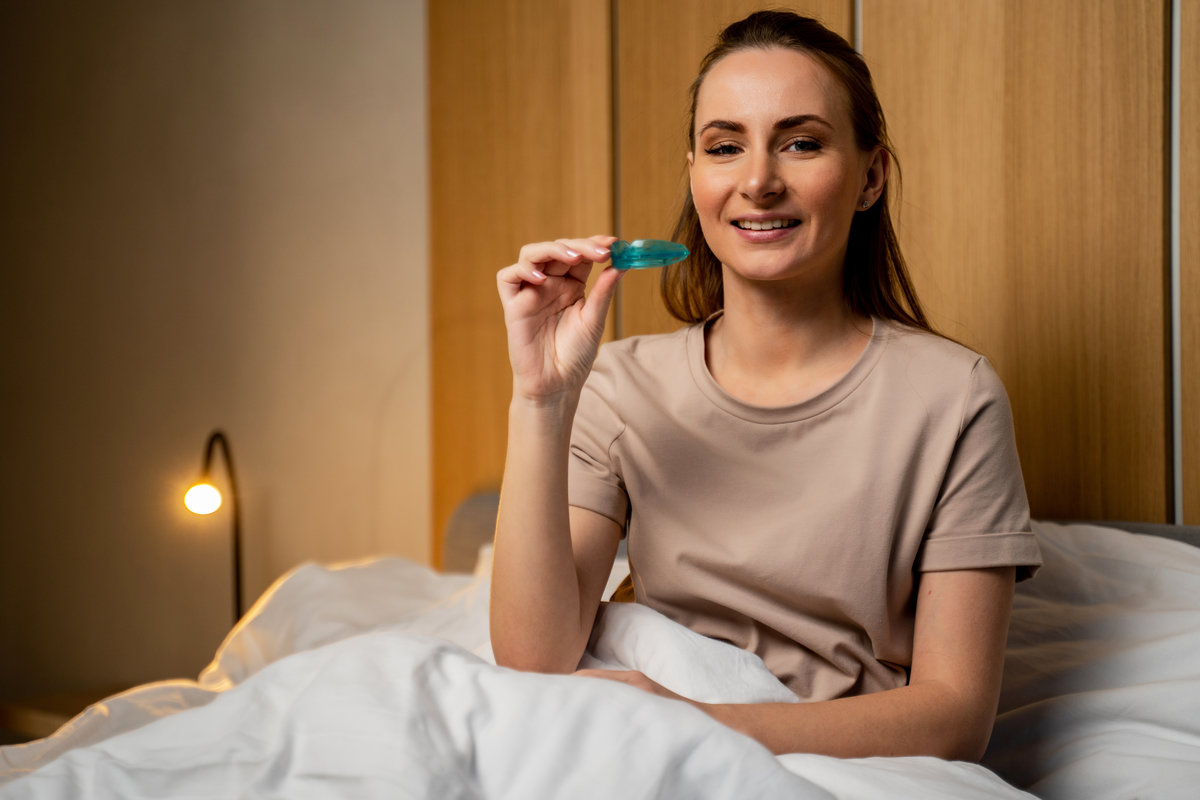
Most people who grind their teeth at night don’t know they do it. Bruxism — the clinical term for nighttime tooth grinding and jaw clenching — is one of the more common dental conditions Dr. Sandhu encounters, and it’s also one of the most frequently missed, because it happens entirely during sleep. The first clues often come from a partner who notices the sound, or from a dentist who spots the telltale flat, worn edges on the grinding surfaces of the teeth. If left unaddressed, bruxism causes significant, cumulative damage — to the teeth themselves, to any dental restorations you’ve had placed, and often to the temporomandibular joint (TMJ) as well. A custom night guard is the most reliable, non-invasive way to protect against that damage and give your jaw a chance to rest.

Because bruxism happens during sleep, the symptoms tend to surface during waking hours. Common signs include waking up with a sore or tight jaw, dull headaches that start around the temples, tooth sensitivity that’s worsened over time, and teeth that look flatter or shorter than they used to. Chipped or cracked teeth without a clear trauma history are another common finding. Dr. Sandhu evaluates for signs of bruxism at every comprehensive exam and can identify wear patterns that indicate active grinding, even when patients aren’t aware it’s happening.

A custom night guard creates a physical barrier between your upper and lower teeth, preventing direct contact during grinding episodes. Rather than grinding tooth against tooth — which causes irreversible enamel loss — you grind against a durable, smooth acrylic surface that absorbs and diffuses the force. This doesn’t stop bruxism (which has neurological roots and can be difficult to eliminate entirely) but it does protect your teeth from its consequences. Many patients also report that their jaw feels noticeably less tight in the mornings once they’ve been wearing a guard consistently.
Her educational foundation provides the scientific knowledge necessary for accurate diagnoses and effective treatments. However, Dr. Kupke understands that excellence in dentistry requires ongoing learning. Dental techniques and technologies evolve rapidly, and staying current with these advancements ensures patients receive the most effective care available.
To maintain this commitment to excellence, Dr. Kupke regularly participates in continuing education courses and professional development opportunities. These additional certifications and training sessions keep her at the forefront of dental innovation, allowing her to incorporate new approaches that improve patient outcomes and comfort.
Drugstore night guards — the boil-and-bite variety — are widely available but consistently underperform for one fundamental reason: they don’t fit well. A guard that shifts during the night requires your jaw muscles to clench just to hold it in place, which can actually worsen TMJ symptoms rather than help them. Guards that are too thick change your bite position and can cause new soreness. Custom-fabricated night guards from Dr. Sandhu are made to the exact contours of your teeth, calibrated to the appropriate thickness for your grinding pattern, and polished smooth so you’ll barely notice you’re wearing one. The difference in comfort and effectiveness is substantial.
There is significant overlap between bruxism and TMJ dysfunction — grinding and clenching are both major contributors to TMJ pain, and many patients who need a night guard also benefit from evaluation of their TMJ health overall. For patients whose jaw pain, headaches, or facial muscle soreness is significant, Dr. Sandhu may discuss therapeutic Botox for TMJ as a complementary approach. A combination of a night guard to protect the teeth and Botox to reduce muscle overactivity can be particularly effective for patients dealing with both problems simultaneously.
The most reliable way to find out is a dental evaluation. Dr. Sandhu will look for wear patterns, check the integrity of existing restorations, and ask about symptoms like morning jaw soreness, headaches, or tooth sensitivity. If you have a partner who has noticed grinding sounds during your sleep, that’s also a strong indicator worth mentioning.
That depends on whether the underlying bruxism resolves. Stress and certain medications are common contributors to grinding; if those factors change, grinding may diminish. Many patients do wear a night guard long-term as a precautionary measure — particularly if they’ve had significant dental work they want to protect. Dr. Sandhu will reassess your situation at regular checkups.
Coverage varies by plan. Some dental insurance policies cover night guards in whole or in part, particularly when documented bruxism has caused measurable tooth damage. Our team will review your benefits before your appointment and help you understand your options.
Night guard” refers specifically to an appliance worn during sleep to protect against grinding and clenching. Sports mouthguards are worn during athletic activity to absorb impact and protect against injury. The materials, thickness, and design of each are calibrated to their specific purpose — they are not interchangeable.
Protect your teeth while you sleep. Book a night guard consultation at Heart of Hingham or call (781) 630-9924 to get started.
We welcome new patients and look forward to helping you achieve a healthy, beautiful smile. Contact us today to schedule your consultation and start your dental care journey.