
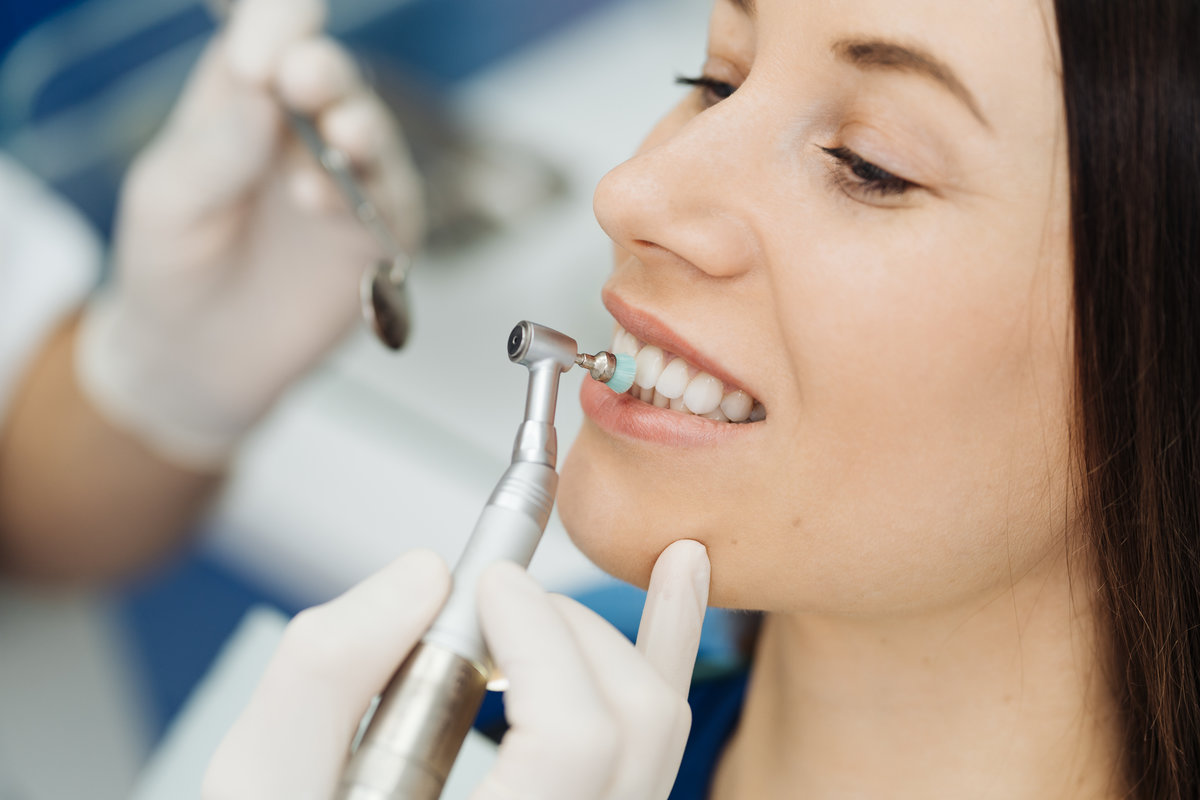
Scaling and root planing — often called a deep cleaning — is the front-line treatment for periodontitis, the more advanced form of gum disease in which bacteria have migrated below the gumline and begun affecting the bone and connective tissue that anchor your teeth in place. Unlike a standard cleaning, which addresses tooth surfaces above and just below the gumline in a healthy mouth, scaling and root planing works deeper: removing the hardened deposits (calculus) and bacteria that have accumulated on root surfaces and in the periodontal pockets that develop as the disease progresses. At Heart of Hingham Dental Aesthetics, Dr. Sandhu performs scaling and root planing with care and precision, ensuring the procedure is as comfortable as possible and that patients understand exactly what’s happening and why.

Not every patient with puffy or bleeding gums needs scaling and root planing. For mild gingivitis — early-stage gum inflammation confined to the gum tissue — a thorough cleaning and improved home care is often all that’s needed. Scaling and root planing is indicated when gum disease has progressed to periodontitis: when pockets have deepened to a point where bacteria cannot be adequately removed by standard cleaning, when X-rays show bone loss, or when there is clinical evidence that the attachment between the gum tissue and the teeth has broken down. During your evaluation, Dr. Sandhu will measure your pocket depths and review your X-rays to determine whether this level of treatment is appropriate.

Scaling and root planing is typically performed in two appointments — one covering the right side of the mouth, the second covering the left — with local anesthesia to ensure you’re comfortable throughout. Dr. Sandhu uses fine scaling instruments to remove calculus deposits from root surfaces below the gumline, working down to the base of each pocket. Root planing follows: the root surface is carefully smoothed to remove rough areas where bacteria adhere most readily, making it harder for them to reattach after treatment. The full procedure is thorough by design — the goal is to give the gum tissue the best possible environment in which to heal and reattach to the tooth.
Her educational foundation provides the scientific knowledge necessary for accurate diagnoses and effective treatments. However, Dr. Kupke understands that excellence in dentistry requires ongoing learning. Dental techniques and technologies evolve rapidly, and staying current with these advancements ensures patients receive the most effective care available.
To maintain this commitment to excellence, Dr. Kupke regularly participates in continuing education courses and professional development opportunities. These additional certifications and training sessions keep her at the forefront of dental innovation, allowing her to incorporate new approaches that improve patient outcomes and comfort.
The gum tissue in treated areas will often be tender and may look slightly inflamed for a few days following each appointment — a normal part of the healing response. Most patients manage any post-procedure discomfort comfortably with over-the-counter ibuprofen. Sensitivity to hot and cold in the treated area may be temporarily heightened and typically resolves within a week or two. Dr. Sandhu will provide specific home care instructions for the healing period, and a follow-up appointment is typically scheduled four to six weeks later to evaluate how the tissue has responded and determine whether additional treatment is needed.
When performed thoroughly and followed with consistent periodontal maintenance, scaling and root planing is highly effective at stabilizing gum disease. Studies consistently show significant reduction in pocket depth and bacterial load following treatment, and many patients maintain stable gum health for years with regular maintenance visits. The key variable is consistency: the bacteria responsible for periodontitis will begin to repopulate treated pockets over time, which is exactly why the three-to-four-month maintenance interval is so critical to long-term success.
The procedure is performed with local anesthesia, so you will not feel pain during treatment. The anesthesia injection is typically the most uncomfortable part — after which the procedure itself is essentially painless. Post-procedure tenderness is common and manageable, and typically resolves within a few days.
Scaling and root planing is typically divided into two visits — right side and left side — to allow adequate time to work thoroughly and minimize the amount of anesthesia needed at once. A follow-up appointment four to six weeks later is used to assess healing before determining next steps.
Yes, in most cases. Scaling and root planing is classified as a medically necessary periodontal procedure and is covered by the majority of dental insurance plans, though coverage percentage varies by plan. Our team reviews your specific benefits before your appointment so you know what to expect.
A regular cleaning (prophylaxis) removes plaque and tartar from tooth surfaces in a healthy mouth, generally above and just at the gumline. Scaling and root planing addresses deposits below the gumline — on root surfaces within periodontal pockets — in a mouth where gum disease has progressed beyond what standard cleaning can address. They are distinct procedures with different goals, different instruments, and different billing codes.
Don’t put off treating active gum disease. Schedule a periodontal evaluation at Heart of Hingham or call (781) 630-9924 — earlier treatment always delivers better outcomes.
We welcome new patients and look forward to helping you achieve a healthy, beautiful smile. Contact us today to schedule your consultation and start your dental care journey.