
Missing teeth create both functional and aesthetic challenges that affect your daily life. When gaps exist in your smile, you may struggle with proper chewing, clear speech, and the confidence to smile openly. Beyond these immediate concerns, missing teeth allow neighboring teeth to shift, potentially leading to bite problems, jaw pain, and additional tooth loss over time. Finding a solution that restores both function and appearance becomes essential for your long-term oral health and quality of life.
At Heart of Hingham Dental Aesthetics, Dr. Shreen Sandhu Kupke provides custom porcelain bridges that elegantly replace missing teeth with natural-looking, durable restorations. Our bridges not only restore your ability to eat comfortably and speak clearly but also recreate the appearance of a complete, harmonious smile.

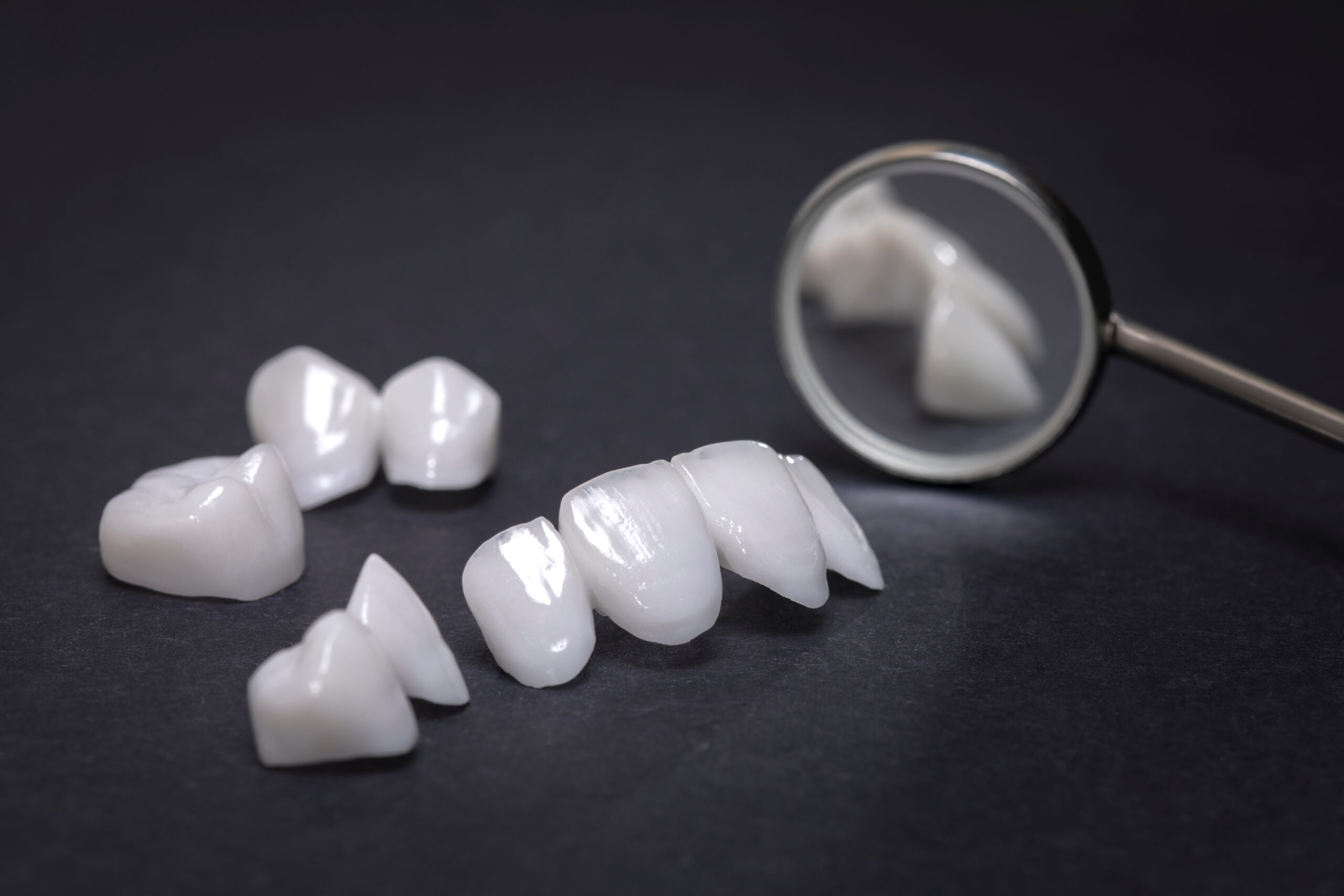
A dental bridge literally “bridges” the gap created by one or more missing teeth. This restoration consists of replacement teeth (pontics) supported by crowns placed on the natural teeth adjacent to the gap. These supporting teeth, called abutments, provide stable anchoring for the bridge, distributing biting forces across the restoration and natural teeth.
Modern porcelain bridges represent significant advancements over traditional metal or metal-porcelain combinations. All-ceramic bridges offer unmatched aesthetic advantages while providing the durability necessary for long-term function. The translucent quality of dental porcelain mimics natural enamel, allowing light to reflect through the restoration just as it would through natural teeth.
Dental bridges serve multiple important functions beyond simply filling gaps in your smile. They prevent remaining teeth from drifting out of position, maintain proper bite alignment, restore normal chewing function, and improve speech clarity that might be affected by missing teeth. By distributing bite forces appropriately, bridges also help protect remaining teeth from excessive stress and premature wear.
For qualified candidates, bridges offer several advantages compared to removable partial dentures. Their fixed nature eliminates concerns about movement or slipping during eating and speaking, and their solid structure typically feels more natural. Many patients appreciate not having to remove the restoration for cleaning, as is necessary with removable appliances.
Creating your custom porcelain bridge typically involves several appointments spread over a few weeks, though the process may vary slightly depending on your specific situation and needs.
Your journey begins with a comprehensive consultation to evaluate your missing teeth, the condition of adjacent teeth, and overall oral health. We discuss your options, address questions, and develop a personalized treatment plan based on both clinical requirements and your preferences.
During your preparation appointment, we gently reshape the abutment teeth to create space for the crowns that will support your bridge. The amount of reduction varies depending on the bridge material and your specific situation, but we always preserve as much healthy tooth structure as possible while ensuring adequate space for a durable, aesthetically pleasing restoration.
After preparation, we take precise impressions or digital scans that capture the exact dimensions of your prepared teeth and the spaces being restored. These detailed records serve as the blueprint for your custom bridge, ensuring optimal fit and function. We also document the shade and characteristics of your natural teeth to guide the fabrication of a restoration that blends seamlessly with your smile.
While your permanent bridge is being crafted by skilled dental laboratory technicians, we place a temporary bridge to protect your prepared teeth and restore appearance and function. This interim restoration allows you to eat, speak, and smile comfortably during the fabrication period, typically 2-3 weeks.
When your custom porcelain bridge is complete, you return for the placement appointment. We first verify the fit, color match, and bite relationship before permanently cementing the bridge. This careful evaluation ensures your restoration functions properly while achieving the desired aesthetic result.

Several bridge designs exist, each offering specific advantages for different clinical situations. During your consultation, we discuss these options to determine which best addresses your particular needs.
Traditional bridges represent the most common design, with pontics supported by crowns placed on natural teeth on both sides of the gap. This approach provides excellent stability for the replacement teeth but requires preparation of the supporting natural teeth to accommodate the crowns.
Cantilever bridges offer an alternative when supporting teeth exist on only one side of the gap. While less common today than in the past, this design may be appropriate in specific situations where traditional bridges aren’t possible.
Maryland or adhesive bridges provide a more conservative option for suitable candidates, particularly for front teeth. These bridges use metal or porcelain wings bonded to the backs of adjacent teeth rather than full crowns, preserving more natural tooth structure. While less invasive, they may not provide sufficient support for all clinical situations, especially in areas of heavy chewing forces.
Implant-supported bridges represent an advanced option that eliminates the need to prepare adjacent healthy teeth. Dental implants placed in the jawbone provide support for the bridge, creating a restoration that closely mimics the structure and function of natural teeth while preserving the integrity of neighboring teeth.
Adapting to your new porcelain bridge happens quickly for most patients. The restoration is designed to feel and function like natural teeth, so normal speaking and eating typically resume shortly after placement. Any minor sensitivity around the abutment teeth usually resolves within a few days as tissues adapt to the bridge contours.
Maintaining your investment requires attentive but straightforward care. While the porcelain itself cannot develop decay, the natural teeth supporting the bridge remain vulnerable, particularly at the margins where crowns meet tooth structure. Daily cleaning requires special attention to these areas and beneath the pontics where the bridge meets the gumline.
We provide specific instructions and tools for cleaning your bridge effectively, including floss threaders or specialized brushes that access areas beneath the pontics. These few extra steps in your daily oral hygiene routine help ensure the longevity of both your bridge and supporting teeth.
Regular dental examinations allow us to monitor your bridge, checking for any signs of wear or changes at the margins. Professional cleanings help maintain the health of supporting teeth and gum tissue, preventing problems that might compromise your restoration over time.
Dr. Sandhu creates custom porcelain bridges that seamlessly replace missing teeth while restoring both function and aesthetics to your smile. With meticulous attention to color matching, proportion, and bite alignment, she designs bridges that blend naturally with your existing teeth and provide years of reliable service. Whether you need a traditional bridge or are considering implant-supported options, Dr. Sandhu evaluates your unique situation to recommend the solution that best meets your needs. Contact us today to schedule your consultation and take the first step toward completing your smile with a beautiful, natural-looking dental bridge.
We welcome new patients and look forward to helping you achieve a healthy, beautiful smile. Contact us today to schedule your consultation and start your dental care journey.