
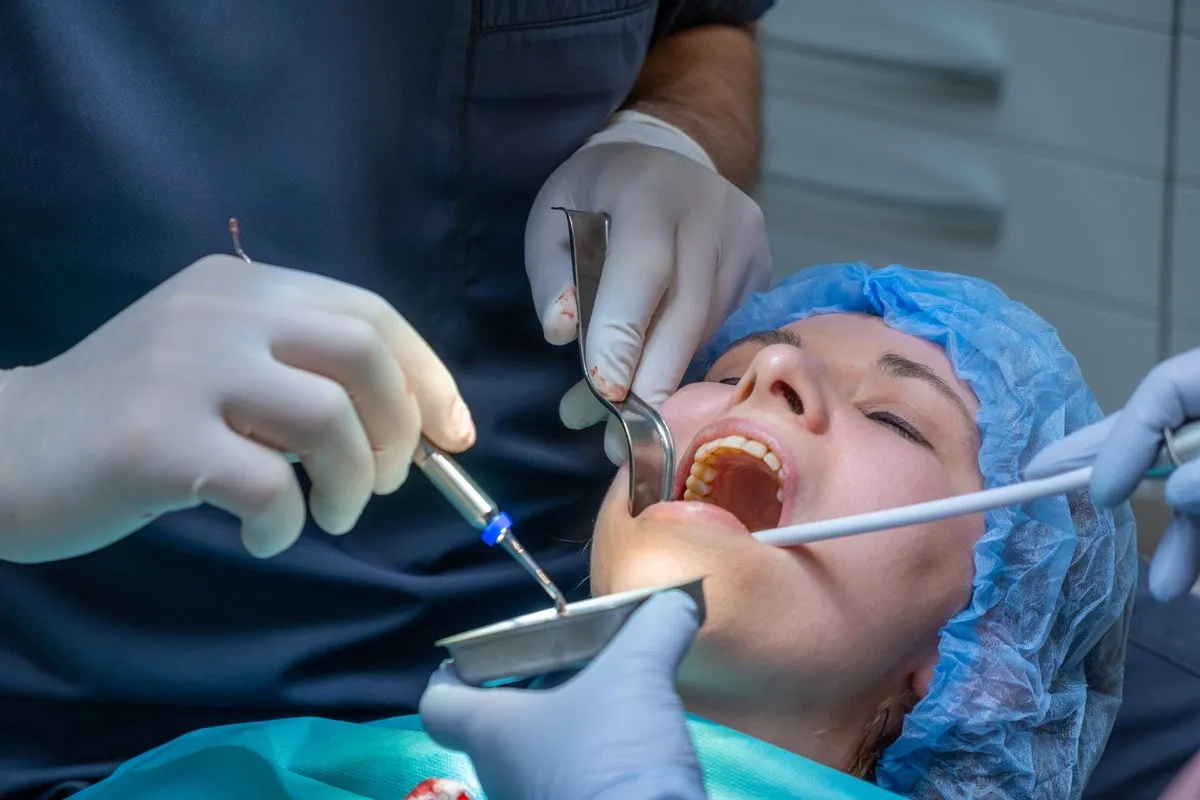
Think of your jawbone like the foundation of a house. The moment a tooth goes missing, that foundation begins to shift, quietly, gradually, and often without any noticeable pain. By the time most patients consider dental implants, the bone beneath the surface has already started to resorb, leaving behind a ridge that may not be strong enough to support a new tooth. Bone grafting is the procedure that changes that equation. It rebuilds what was lost, restores your jaw’s structural integrity, and opens the door to long-term tooth-replacement solutions that would otherwise be out of reach.
At Heart of Hingham Dental Aesthetics, Dr. Shreen Sandhu Kupke places dental implants herself and performs bone grafting procedures with the same commitment to precision and personalized care that defines every appointment at the practice. Located in the heart of Hingham, Dr. Sandhu brings an international dental education, including her degree from India and advanced training through Boston University’s accelerated dental program, to every procedure she performs. Her warm, empathetic approach means patients are fully informed and genuinely comfortable before any treatment begins. If you’re exploring whether dental implants might be right for you, bone grafting is often the first step in making that happen.

Dental bone grafting is a surgical procedure that rebuilds or augments areas of the jawbone that have deteriorated due to tooth loss, gum disease, trauma, or other factors. During the procedure, bone graft material, which can come from the patient’s own body, a donor source, or a biocompatible synthetic material, is placed in the deficient area. Over time, the existing bone grows into and around the graft, creating a stable, dense structure capable of supporting a dental implant.
The process is known as osseointegration, and it is the biological mechanism that makes modern implant dentistry possible. Without sufficient bone volume, an implant has nothing to anchor into. Bone grafting addresses that gap directly, creating the right conditions for a successful, long-lasting result.
Bone grafting is an important step in implant preparation. We offer 0% financing through Cherry, and some procedures may be covered under your PPO plan.

Most patients are surprised to learn how quickly bone loss can begin after a tooth is extracted. The root of a natural tooth provides constant stimulation to the surrounding bone, signaling the body to maintain density in that area. Once a tooth is removed, that signal disappears, and the body begins to resorb the bone. In many cases, noticeable volume loss occurs within the first year.
Other contributors to jawbone loss include advanced periodontal disease, which destroys the bone and tissues supporting the teeth, as well as trauma, infection, and wearing ill-fitting dentures over many years. Patients who have been missing teeth for a significant period often require bone grafting before many of the dental services at Heart of Hingham can be performed, particularly those involving implants. Understanding the cause of your bone loss helps Dr. Sandhu develop a treatment plan that addresses both the underlying condition and the structural deficiency.
Before any procedure begins, Dr. Sandhu conducts a comprehensive evaluation that includes a review of your medical history, an assessment of your oral health, and advanced imaging to evaluate the quality and volume of your jawbone. This step determines whether any preparatory work, such as bone grafting, is needed before placement. Comprehensive exams are the foundation of any successful implant outcome, and we take this stage seriously.
Once you are cleared for placement, Dr. Sandhu surgically positions the titanium post into the jawbone at the site of the missing tooth. The procedure is performed with local anesthesia, and most patients report less discomfort than they anticipated. After placement, the healing phase begins. Over several months, the implant gradually fuses with the surrounding bone, creating a stable base for the final restoration.
After osseointegration is complete, Dr. Sandhu places an abutment on the post and then attaches a custom-designed crown that matches the color, size, and shape of your surrounding teeth. The result is a restoration indistinguishable from a natural tooth. Because Dr. Sandhu oversees both the surgical and restorative phases, the crown is designed with the placement in mind, ensuring a precise fit and a natural-looking finish. For patients who have also experienced damage to adjacent teeth, dental crowns and bridges may be considered alongside implant treatment to restore the full arch.
Not every bone graft is the same, and the right approach depends on where the bone loss has occurred, how much volume needs to be restored, and your overall treatment goals. The most common options include:
The type of graft material also varies. Autografts use bone harvested from your own jaw or chin, while allografts use donor bone that has been processed and sterilized. Xenografts are derived from animal sources, and synthetic options are also available. Each has distinct advantages depending on your specific situation.
Bone grafting has a well-established track record in modern implant dentistry, and the clinical evidence supports its effectiveness. A large-scale retrospective study analyzing over 45,000 dental bone grafts placed alongside implants found a clinical success rate of 97.83%, comparable to implants placed without augmentation. The research reinforces what experienced implant dentists have observed in practice. When bone grafting is performed properly and healing is allowed to progress fully, implant outcomes are improved by the additional step.
For patients who have been told they are not candidates for implants due to insufficient bone, these findings are particularly meaningful. Bone grafting is not a workaround. It is a well-documented, evidence-based pathway to successful tooth replacement. For those who have experienced bone loss due to tooth loss or gum disease and are now exploring options such as dental bridges, a comprehensive evaluation will determine the best course of action.
Every bone grafting case at Heart of Hingham Dental Aesthetics begins with a thorough evaluation to assess your current bone volume, review your medical history, and confirm that you are a good candidate for the procedure. From there, Dr. Sandhu creates a customized treatment timeline that accounts for the healing needed before implant placement can begin.
During the grafting procedure, the area is completely numbed, with many patients reporting that the experience is far more comfortable than they anticipated. Mild soreness and swelling in the days following are normal and manageable. The integration period, during which the graft fuses with the existing bone, typically takes a few months, after which implant placement can proceed. Dr. Sandhu coordinates every step of this process in-house, ensuring continuity of care from the first consultation through the final restoration.
For patients in Hingham and across the South Shore, bone grafting is not the end of a difficult diagnosis. It is the beginning of a reliable solution. The ability to restore lost bone means that tooth replacement is possible for a far wider range of patients than it was a generation ago, and Dr. Sandhu’s expertise in performing implants and bone grafting under one roof simplifies an otherwise complex process. Dr. Sandhu’s combination of international training, Boston University residency experience, and genuine investment in each patient’s well-being makes Heart of Hingham Dental Aesthetics a trusted home for implant-related care on the South Shore.
If you have been told you may need a bone graft before getting a dental implant, or if you simply want to understand your options after tooth loss, we encourage you to take the next step. Contact our office today to schedule a free consultation with Dr. Sandhu and find out whether bone grafting is the right foundation for your smile.
Restore your smile with confidence. Book a Bone Grafting consultation at Heart of Hingham and see the difference one visit can make.
We welcome new patients and look forward to helping you achieve a healthy, beautiful smile. Contact us today to schedule your consultation and start your dental care journey.